What is a fuel catalyst? - Powerfuel

What is a fuel catalyst?
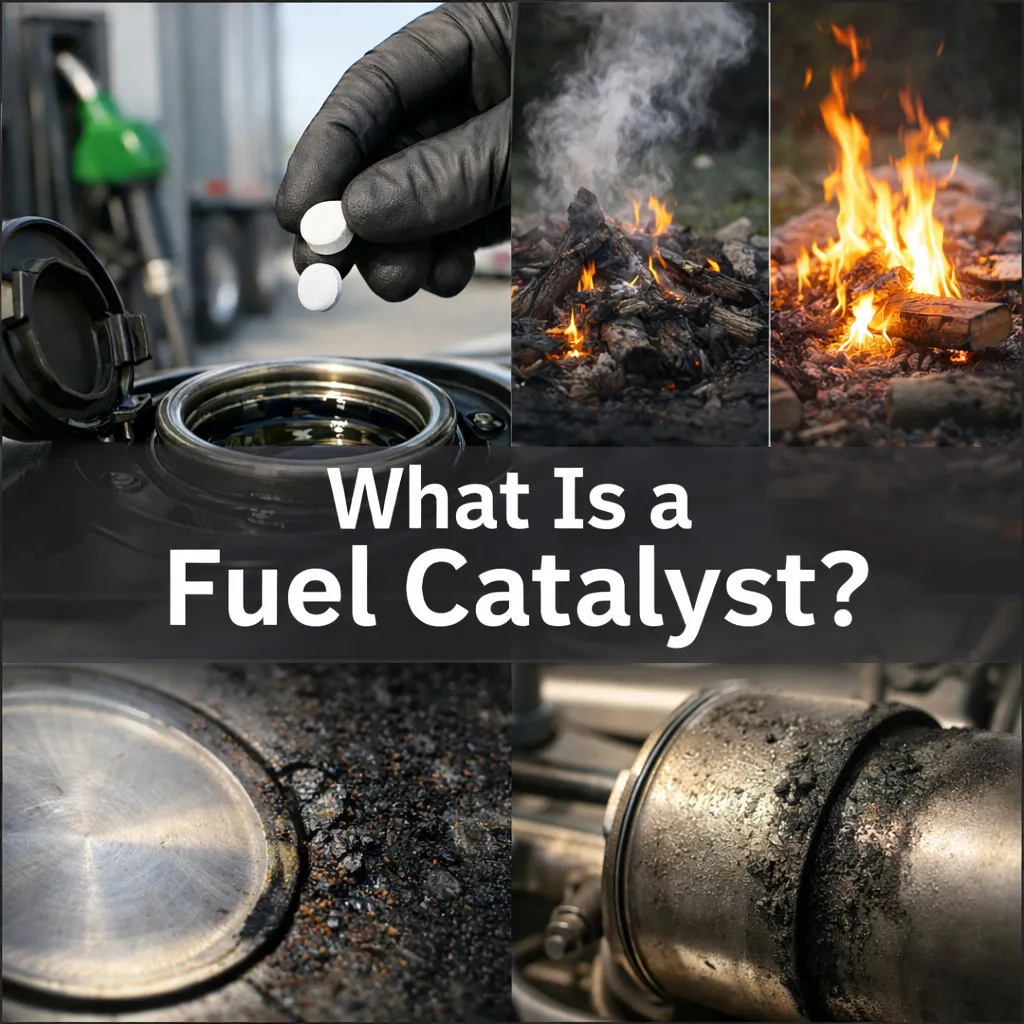
A fuel catalyst is something you add to fuel that helps it burn more completely inside the engine. Think of it like a “burn helper.” It makes the fuel light off easier, burn cleaner, and leave less junk behind.
In trucking terms. A fuel catalyst helps you get more usable power out of the same gallon, instead of wasting fuel as smoke, soot, and carbon buildup.
Fuel catalyst vs fuel additive
A lot of drivers say “additive” for anything they pour into the tank. That’s normal. But here’s the clean difference.
Fuel additive = the big umbrella term
(injector cleaners, anti gel, lubricity, cetane boosters, water control, etc.)Fuel catalyst = a specific type of additive
focused on improving the burn process itself
So yeah. A fuel catalyst is a fuel additive. But not every fuel additive is a catalyst.
Why diesel doesn’t always burn perfectly
Here’s the easiest way to picture it.
Your diesel engine is basically a controlled explosion happening over and over. Fuel gets injected, compressed, and ignited thousands of times a minute. In a perfect world, every drop of diesel would burn completely and cleanly.
But real life doesn’t run “perfect.”
Things that can mess with the burn.
Heavy loads and long pulls
Stop and go city routes
Excessive idle time
Cold starts and winter fuel
Dirty injectors or worn spray patterns
Low quality fuel
When the burn isn’t complete, it leaves behind leftovers.
Those leftovers turn into.
Soot (black smoke)
Carbon deposits in the combustion chamber
Dirtier oil over time
Extra buildup on the exhaust side

s
How a fuel catalyst works.
Imagine a campfire.
If you throw a big wet log on the fire, it smokes and struggles to burn. You lose heat, and you get nasty black smoke.
Now imagine you add something that helps the fire burn that log better. Less smoke. More heat. Cleaner flames.
That’s basically what a fuel catalyst aims to do inside the engine.
A catalyst helps fuel ignite and burn more completely. Meaning.
More of the fuel turns into usable power
Less of the fuel turns into waste and carbon

What benefits drivers usually notice
Most drivers run a fuel catalyst because they want one or more of these wins.
1. Better MPG (more miles per tank)
If the burn is cleaner and more complete, you can get more energy from the fuel you already paid for. That’s the goal.
2. Cleaner combustion = less buildup
A cleaner burn can mean fewer carbon deposits stacking up over time.
3. Smoother running engine
Some drivers notice smoother idle, better throttle response, and less “roughness” under load.
4. Less smoke and haze
Incomplete combustion often shows up as extra smoke. A cleaner burn helps reduce that.
Will a fuel catalyst really increase MPG?
It can. But you have to test it the right way.
MPG in trucking is affected by a lot more than additives.
The biggest MPG killers are.
Speed and wind
Terrain (mountains vs flats)
Load weight
Idle hours
Tire pressure
Alignment
Traffic
Driving style
So if you want real proof, measure it like a professional.
Here’s the simple way.
Track MPG across 3 to 5 full tanks
Log route, load, and idle time
Compare apples to apples
That’s how you know what’s actually helping.

Is a fuel catalyst safe for modern diesel trucks?
Yes. When you use the right product correctly.
Modern diesel fuel systems are expensive. High pressure injection systems are tight tolerance. Emissions systems can be sensitive. So the rule is simple.
Use a catalyst built for diesel engines
Follow dosing instructions
Don’t “double dose” trying to force results
Don’t stack random additives without a plan
Consistency wins. Overdoing it can create problems.
Fuel catalyst and emissions systems (DPF and SCR)
If your truck is emissions equipped, you already know soot buildup is the enemy.
A cleaner burn can help reduce soot load, which helps the whole exhaust system work smoother over time.
That said. Driving style and duty cycle still matter a lot.
A truck that idles all day will still battle soot. Even with the best product.

What is the best diesel additive?
The best diesel additive depends on what you want to fix.
Here’s the easiest way to choose the right one.
If your goal is better MPG
A combustion focused product is usually the best place to start. That’s where fuel catalysts shine.
Best for.
Drivers running long routes
Fleets tracking fuel costs
Anyone who wants a simple routine at the pump
If your goal is cleaning injectors
Use a diesel injector cleaner (detergent additive). This is best when you notice.
Rough idle
Slower starts
Power loss
Extra smoke
If your goal is winter protection
You need anti gel. Period.
A catalyst is not the same as anti gel.
If your goal is lubricity and protection
Look for lubricity support, especially if you want extra margin with ULSD.
We also have an article on What is The Best Fuel Additive, a 7 min read!
When a fuel catalyst makes the most sense
Fuel catalysts are a strong fit when your engine works hard.
Long haul miles
Heavy loads
Stop and go routes
Lots of idle time
Trucks, equipment, generators, work rigs
Anywhere fuel is being burned all day is where small efficiency gains can actually matter.
Quick FAQ
Do I add it to a full tank?
Yes. It will still work. The only difference is mixing. If you add it before fueling, the incoming fuel helps stir it up faster. Read our blog explaining the pros and cons of adding catalysts and additives to a full tank here.
How fast will I notice results?
Some drivers notice smoother running quickly. MPG improvements are easiest to measure over multiple tanks.
Should I use it every fill up?
Yes. If you want consistent results, consistency matters. Random one off dosing is hard to measure.
Want a simple fuel catalyst you can run every fill?
If you’re chasing better MPG, cleaner combustion, and an easy routine at the pump, PowerFuel Tabs are built for exactly that.
Drop a tab in while you fuel up. Drive your normal route. Track your MPG over a few tanks and see the difference for yourself.
