Can I add fuel additive to a full tank? - Powerfuel
Can I add fuel additive to a full tank?
Yes. You can add a fuel additive to a full tank. It usually still works. The main downside is mixing. When you add additive before you fuel up, the incoming fuel stream helps stir it through the tank. If the tank is already full, you just need a little motion and time to blend it.
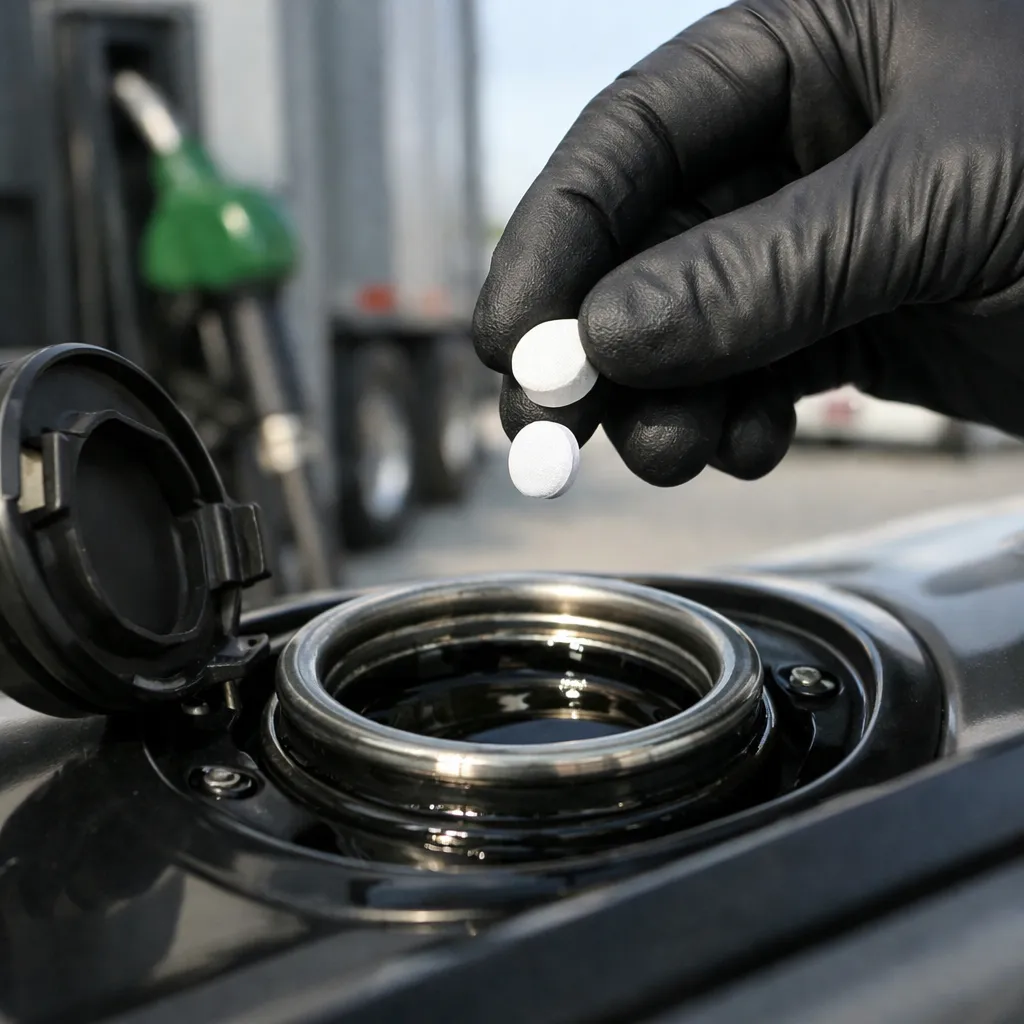
For PowerFuel Tech’s tablet style additive (PowerFuel Tabs), their process is designed to be simple “add at the pump.” Their site positions the product as a drop in tablet you dose at fill up, then drive normally.
Why most labels say “add first, then fill”
Most additives recommend “add first” for two practical reasons.
Better mixing. The fuel rushing in acts like a blender.
Accurate dosing. Many additives are measured “per gallon.” If you add it after the tank is topped off, you might be treating a slightly smaller amount than intended.
If you already have a full tank, it is not a deal breaker. You just handle mixing differently.
The safe way to add fuel additive to a full tank
Use this simple approach.
Step 1. Confirm dosing. Check the product’s treat rate (example: per 15 gallons, per 20 gallons, etc.). If you do not know how many gallons are in the tank, estimate based on your tank size and fuel gauge.
Step 2. Add the additive slowly. Pour liquid additives steadily to reduce splash back. For tablets, drop them in as directed.
Step 3. Drive 10 to 20 minutes soon after. Turns, stops, acceleration, and road vibration help mix the additive through the tank.
Step 4. For best results, top off later. When you burn a few gallons, add a small top off. That incoming fuel stream finishes the mix.
If you are in a situation where the tank is literally “to the brim,” you may need to burn off a little fuel first to create headspace. This avoids spill risk when adding anything through the fill neck.
Will it work as well in a full tank?
Usually, yes. The difference is mostly how fast it disperses.
With “add first then fill,” you get fast, uniform distribution.
With “full tank,” you get distribution as you drive and the fuel sloshes.
For most modern diesel and gas additives, the chemistry does not “go bad” just because the tank was full first. Mixing is the key variable.
Special notes for tablet fuel additives
Tablet additives are popular because they are clean and easy to handle at the pump.
PowerFuel Tech describes two dosing formats. A tablet (PowerFuel Tabs) for on vehicle dosing. A liquid concentrate for bulk tanks and high throughput fueling.
If you are adding a tablet to a full tank, do this.
Drop the tablet in.
Drive normally.
If you want the “closest to fill up mixing,” add it right before a short drive, not right before parking overnight.
PowerFuel Tech also markets the tablets as a simple add at the pump routine with typical mileage improvement ranges and emissions reduction claims.
Common mistakes that reduce results
These are the big ones that mess up performance and make people think “additives do not work.”
Underdosing. Treating 30 gallons with a dose meant for 15 gallons.
Overdosing “because more is better.” Some additives can be counterproductive when overdosed, especially strong detergents.
Adding it, then letting the truck sit. Additive does not circulate like oil. It blends by motion and refueling turbulence.
Expecting instant miracles from one tank. Some effects are immediate (smoothness, smoke reduction). Others show up over multiple tanks (deposit cleanup consistency).
Can fuel additives hurt injectors, DPF, or emissions systems?
It depends on the additive type and whether it is used correctly.
In general, reputable diesel additives fall into a few categories.
Detergents (injector cleaners): Help keep injectors and pumps clean.
Cetane improvers: Help ignition quality for smoother combustion.
Lubricity additives: Help protect fuel system components, especially in ULSD conditions.
Anti gel and cold flow: Winter protection against waxing and gelling.
Water control: Helps manage water contamination (important for storage and some climates).
If your truck is emissions equipped (DPF, SCR/DEF), stick to products that clearly state compatibility and follow the label dosing. If you are unsure, default to conservative dosing and avoid stacking multiple additives at once unless the manufacturer says it is fine.
What is the best diesel additive?
There is not one single “best” for every driver. The best diesel additive depends on what problem you are solving. Here is a practical way to choose.
If your goal is higher MPG
Look for additives that focus on combustion efficiency, cetane improvement, and deposit control. A cleaner burn can improve smoothness and may reduce wasted fuel in incomplete combustion.
PowerFuel Tech positions their tabs as a combustion catalyst and burn rate modifier, claiming cleaner, more complete combustion and reporting typical mileage improvement ranges in case studies and user logs.
What to look for.
Simple dosing you will actually stick with.
Clear treat rate.
Real world tracking. MPG claims are only meaningful if you log miles, gallons, route, load, idle time.
If your goal is injector health and smoother running
A strong detergent package (diesel injector cleaner) can help. This is especially relevant if you notice.
Rough idle
Hard starts
Increased smoke
Noisy combustion
In this lane, many drivers rotate a cleaner periodically rather than running an aggressive cleaner every tank.
If your goal is winter reliability
Pick a dedicated anti gel and cold flow improver. MPG focused additives are not the same as winter protection.
What to look for.
Temperature performance clearly stated.
Proper dosing for your tank volume.
Add before the cold snap if possible.
If your goal is fuel system protection
Look for lubricity support, especially if you run older systems or you want extra margin in ULSD.
My “best additive” rule for truckers
Pick one primary additive that matches your main goal (MPG, winter, cleaning, protection). Use it consistently. Track results over 3 to 5 tanks under similar conditions. Consistency beats constant switching.
How to tell if an additive is working
Use simple, real world signals.
MPG trend over multiple tanks. Compare similar routes and loads.
Smoother idle and throttle response.
Reduced smoke under load.
Less frequent regen, or shorter regens. This can vary heavily by duty cycle, so track it carefully.
PowerFuel Tech specifically markets reductions in emissions and typical mileage improvement ranges. Treat those as claims you should verify with your own logs.
Quick FAQ
Can I add fuel additive after I already filled up?
Yes. Drive soon after to mix it.
What if my tank is completely full?
Burn a little fuel first to create headspace. Then add the additive safely.
Is it better to add additive before or after fueling?
Before is better for mixing. After still works.
How often should I use a diesel additive?
Depends on the product and your goal. Many drivers use an MPG focused or maintenance formula every tank, then use a stronger cleaner occasionally. Follow label instructions.
Bottom line
You can add fuel additive to a full tank. Do it safely, dose correctly, and drive soon after to mix it. If your main goal is MPG, the “best diesel additive” is the one you will use consistently and can verify with real logs.
If you want a tablet based option designed for a simple add at the pump routine, PowerFuel Tech’s PowerFuel Tabs are positioned specifically around improving combustion efficiency and supporting better miles per tank.
Call to action: Visit PowerFuel Tech’s website to check out their fuel tablet and see how it can help you chase higher MPG tank after tank.
