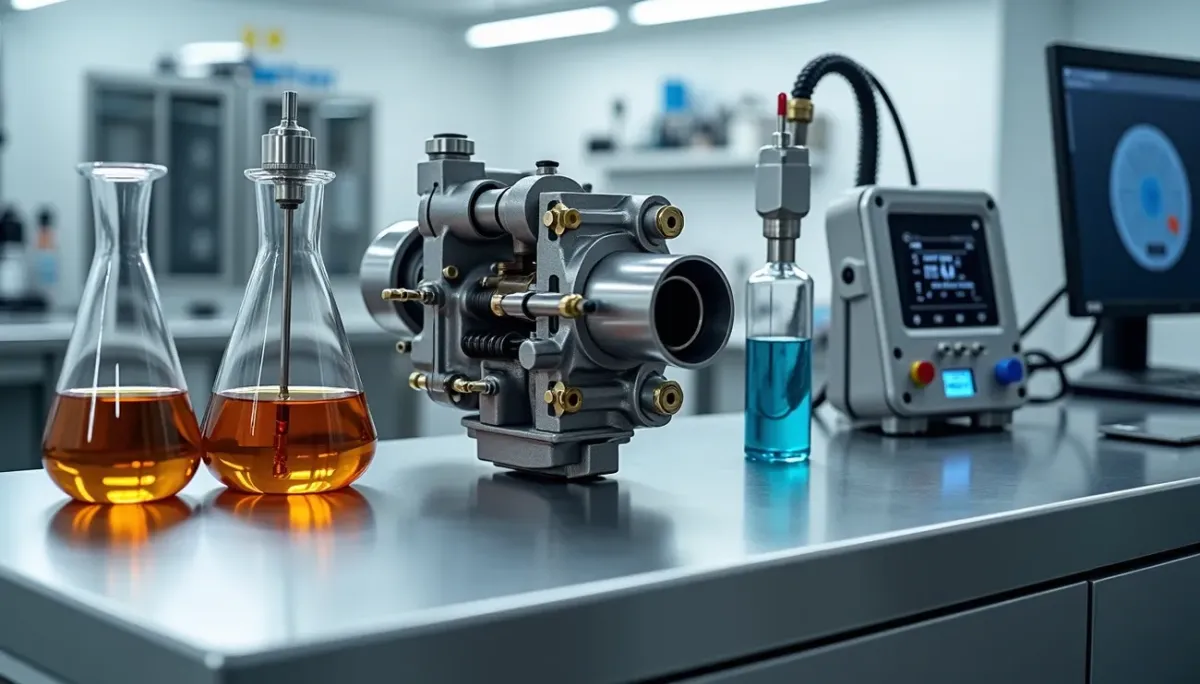
How to Test Diesel Lubricity Additive: Essential Data Points You Must Track
How to Test Diesel Lubricity Additive: Essential Data Points You Must Track

Did you know that the U.S. Army Corps of Engineers consumed approximately 8.29 million gallons of diesel fuel for their floating plant assets in 2010? When testing a diesel lubricity additive, this massive scale of consumption highlights why accurate measurement matters.
During the refinement of Ultra-Low Sulfur Diesel (ULSD), fuel undergoes hydrogen flooding to remove sulfur, but this process also strips away much of the fuel's natural lubrication properties. In fact, at just 15 parts per million, ULSD contains only a fraction of the sulfur found in previously used low-sulfur diesel, which had approximately 500 ppm. While the U.S. standard states commercially available diesel fuel should produce a wear scar no greater than 520 microns, the Engine Manufacturers Association had requested a standard of no greater than 460 microns.
However, before investing in additives, you need reliable data. Studies have shown mixed results—some additives showed no significant effect on fuel consumption, while others, like ethanol injection systems, reduced diesel consumption by an average of 30% at 50% loads.
This guide will walk you through the essential data points you must track when testing diesel lubricity additives to ensure you're making informed decisions for your equipment and fleet.
Key Takeaways
Understanding how to properly test diesel lubricity additives is crucial for protecting your engine investment and making data-driven decisions about fuel treatments.
• Establish a proper baseline using untreated ULSD fuel - Start with fuel producing ~636 microns wear scar to create worst-case scenario for accurate comparison testing.
• Track brake-specific fuel consumption (BSFC) as your primary efficiency metric - Measure in g/kWh to quantify real performance gains, with quality additives showing 2-4% improvements.
• Monitor emissions data for combustion quality validation - Look for CO2 reductions up to 4.57% and particulate matter decreases of 40% as indicators of additive effectiveness.
• Ensure statistical significance with 95% confidence intervals - Use p-values below 0.05 and R-squared values above 0.80 to validate that observed improvements are genuine, not coincidental.
• Measure wear scar reduction as the ultimate protection indicator - Quality additives should reduce HFRR wear measurements by 250+ microns from the 520-micron maximum standard.
The cost of proper testing and quality additives is minimal compared to premature engine repairs, making systematic evaluation essential for fleet operators and equipment owners seeking long-term reliability and efficiency gains.
Understanding Diesel Lubricity and Additives
Image Source: ResearchGate
Diesel lubricity refers to the fuel's capacity to minimize friction between moving engine components under load conditions. This property is crucial for protecting precision parts in diesel engines, particularly fuel injectors and pumps that operate with clearances measured in ten-thousandths of an inch [1].
The hydrotreating process that removes sulfur from diesel fuel simultaneously eliminates organic compounds responsible for natural lubrication [2]. Modern Ultra-Low Sulfur Diesel (ULSD) contains a maximum of 15 ppm sulfur, compared to the 5,000 ppm in traditional diesel available before 2006 [3]. This dramatic reduction has created significant lubricity challenges for diesel engines.
Lubricity is measured using a High Frequency Reciprocating Rig (HFRR), which quantifies the wear scar size in microns after a 90-minute test [1]. The ASTM D975 standard requires diesel fuel to have a wear scar diameter of 520 microns or less [4], although the Engine Manufacturers Association recommends a stricter maximum of 460 microns [5].
Without adequate lubricity, engine components experience premature wear, reduced efficiency, and potentially catastrophic failure [2]. Furthermore, poor lubricity contributes to increased emissions through inefficient combustion [6].
Consequently, diesel lubricity additives have become essential. These additives form protective layers on metal surfaces, functioning similarly to how sulfur did in traditional diesel fuels [7]. Quality additives can reduce wear scar measurements by over 250 microns [6].
Setting Up a Diesel Additive Test
Setting up a proper diesel lubricity additive test requires meticulous preparation and standardized methods to ensure reliable results. Initially, you need to obtain untreated Ultra-Low Sulfur Diesel (ULSD) fuel as your baseline sample—essentially creating a "worst case scenario" of very dry diesel fuel that would likely damage fuel delivery systems [8].
Establish your baseline by testing this untreated fuel using a High Frequency Reciprocating Rig (HFRR) testing facility. A truly untreated ULSD sample typically produces a high HFRR score around 636 microns [8], serving as your control sample for comparison.
Next, prepare your test samples by acquiring additives through independent purchases to eliminate bias. Mix each additive with your baseline fuel using the manufacturer's prescribed dosage ratio [9]. For accuracy, document the exact mixing ratios (e.g., 1:1000 or 480:1) [10].
Prior to actual testing, ensure your system is properly flushed with the additive-containing fuel. This typically involves consuming approximately 2 liters of fuel through simulated driving under controlled load conditions [11].
Subsequently, arrange for data collection equipment including flowmeters for precise fuel measurement. Recognized standards like ASTM D-975 should guide your testing protocols [10]. This methodical setup enables meaningful side-by-side comparisons of each additive's effectiveness against the baseline sample [8].
Essential Data Points to Track During Testing

Image Source: Nature
Tracking precise measurements forms the foundation of any effective diesel lubricity additive test. Brake-specific fuel consumption (BSFC) serves as your primary efficiency indicator, typically measured in grams per kilowatt-hour. One study recorded BSFC measurements ranging from 185 g/kWh to 266 g/kWh across various engine loads [12].
Engine performance data reveals the additive's impact on mechanical efficiency. Monitor:
Power output (measured in kW)
Torque (measured in Nm)
Engine speed (measured in RPM)
Tests have shown power improvements of up to 2.71% after 2000 km with certain additives [11].
Moreover, emissions data provides crucial insights into combustion quality. Research demonstrates some additives reduced CO2 by 4.57%, CO by 14.29%, and NOx by 3.12% [11]. For comprehensive analysis, track particulate matter (PM) reductions, which can reach 40% with certain formulations [13].
Additionally, statistical validation metrics ensure reliable conclusions. Look for adjusted R-squared values (ideally above 0.80) and p-values below 0.05, indicating statistically significant results [14]. Calculate 95% confidence intervals on all measurements to determine if observed differences are genuine improvements [15].
Lastly, cetane measurements assess ignition quality improvements, with most engines benefiting from levels between 40-50 [1]. Additive-induced cetane improvements typically range from 3-7 points [1].
Conclusion
Testing diesel lubricity additives requires meticulous attention to detail and comprehensive data tracking for meaningful results. Throughout this guide, you've learned how modern ULSD fuel, while environmentally friendlier with only 15 ppm sulfur, lacks the natural lubrication properties essential for your engine's health. Accordingly, proper additive testing becomes crucial for protecting precision components that operate with incredibly tight tolerances.
Data-driven decisions start with establishing a proper baseline and following standardized testing protocols. Your measurements must include brake-specific fuel consumption, which directly reflects efficiency gains or losses. Additionally, tracking engine performance metrics such as power output and torque provides concrete evidence of an additive's mechanical benefits. Emissions data further validates combustion quality improvements, while statistical validation ensures your results are scientifically sound rather than coincidental.
Remember that effective lubricity additives should reduce wear scar measurements significantly—often by 250 microns or more. Therefore, your testing methodology must account for both short-term performance gains and long-term component protection. Many fleet operators who implemented rigorous testing protocols have discovered substantial cost savings through reduced maintenance and improved fuel efficiency. Check out PowerFuel Tech to save $250-300 on fillups.
Ultimately, your equipment represents a significant investment that deserves protection through informed additive selection. After all, the minimal cost of quality additives pales in comparison to premature engine repairs or replacements. Armed with the data points outlined in this guide, you can confidently evaluate diesel lubricity additives and make decisions based on objective performance rather than marketing claims.
FAQs
Q1. How is diesel fuel lubricity measured? Diesel fuel lubricity is typically measured using a High Frequency Reciprocating Rig (HFRR) test. This test quantifies the wear scar size in microns after a 90-minute procedure, with smaller wear scars indicating better lubricity.
Q2. What are the key data points to track when testing diesel lubricity additives? Essential data points include brake-specific fuel consumption (BSFC), engine power output, torque, emissions (CO2, CO, NOx, particulate matter), cetane measurements, and statistical validation metrics such as adjusted R-squared values and p-values.
Q3. How much can diesel lubricity additives improve fuel performance? Quality diesel lubricity additives can significantly improve fuel performance. Some studies have shown power improvements of up to 2.71% after 2000 km of use, while others have demonstrated reductions in CO2 emissions by 4.57%, CO by 14.29%, and NOx by 3.12%.
Q4. Why is lubricity important in modern diesel engines? Lubricity is crucial in modern diesel engines because the ultra-low sulfur content in current fuels has reduced their natural lubricating properties. Adequate lubricity protects precision components, particularly fuel injectors and pumps, from premature wear and potential failure.
Q5. How do you set up a proper diesel additive test? To set up a proper diesel additive test, start with untreated Ultra-Low Sulfur Diesel (ULSD) as a baseline. Use standardized testing protocols, prepare samples with precise additive mixing ratios, and ensure proper system flushing before testing. Use flowmeters for accurate fuel measurement and follow recognized standards like ASTM D-975 for testing procedures.
References
[1] - https://www.proboat.com/2018/04/diesel-fuel-additives-part-2-lubricity-facts-and-fictions/
[2] - https://www.archoil.com/pages/how-to-improve-the-lubricity-of-diesel-fuel?srsltid=AfmBOopU7oEado5pi5DjkZZ8-MccQRbTDUAfS6d3qWRegX3eykdnpYZ-
[3] - https://blog.amsoil.com/why-does-diesel-fuel-need-additives/
[4] - https://www.biobor.com/2022/09/14/diesel-fuel-101-part-4/
[5] - https://www.toptiergas.com/wp-content/uploads/2022/10/TOP_TIER_Diesel_Fuel_Performance_Standard_Rev_A_-_Feb2017.pdf
[6] - https://www.archoil.com/pages/how-to-improve-the-lubricity-of-diesel-fuel?srsltid=AfmBOoppxeTKpuJPv7H5-yKqkDm8Qnch8dIAJoWT6fwmmpKdaVS2kK-8
[7] - https://pcs-instruments.com/articles/fuel-lubricity-diesel-engines/
[8] - https://www.jatonkam35s.com/DeuceTechnicalManuals/Diesel_fuel_additive_test.pdf
[9] - https://www.dieselplace.com/threads/lubricity-additive-study-results.177728/
[10] - https://www.researchlaboratoriesinc.com/news/comparison-additive-testing-for-diesel-fuel-additives-know-before-you-buy
[11] - https://www.mdpi.com/2624-8921/7/4/140
[12] - https://psecommunity.org/wp-content/plugins/wpor/includes/file/2304/LAPSE-2023.28737-1v1.pdf
[13] - http://www.visconusa.com/wp-content/uploads/Viscon Presentation.pdf
[14] - https://www.mdpi.com/2227-9717/13/11/3686
[15] - https://apps.dtic.mil/sti/tr/pdf/AD1013242.pdfs
